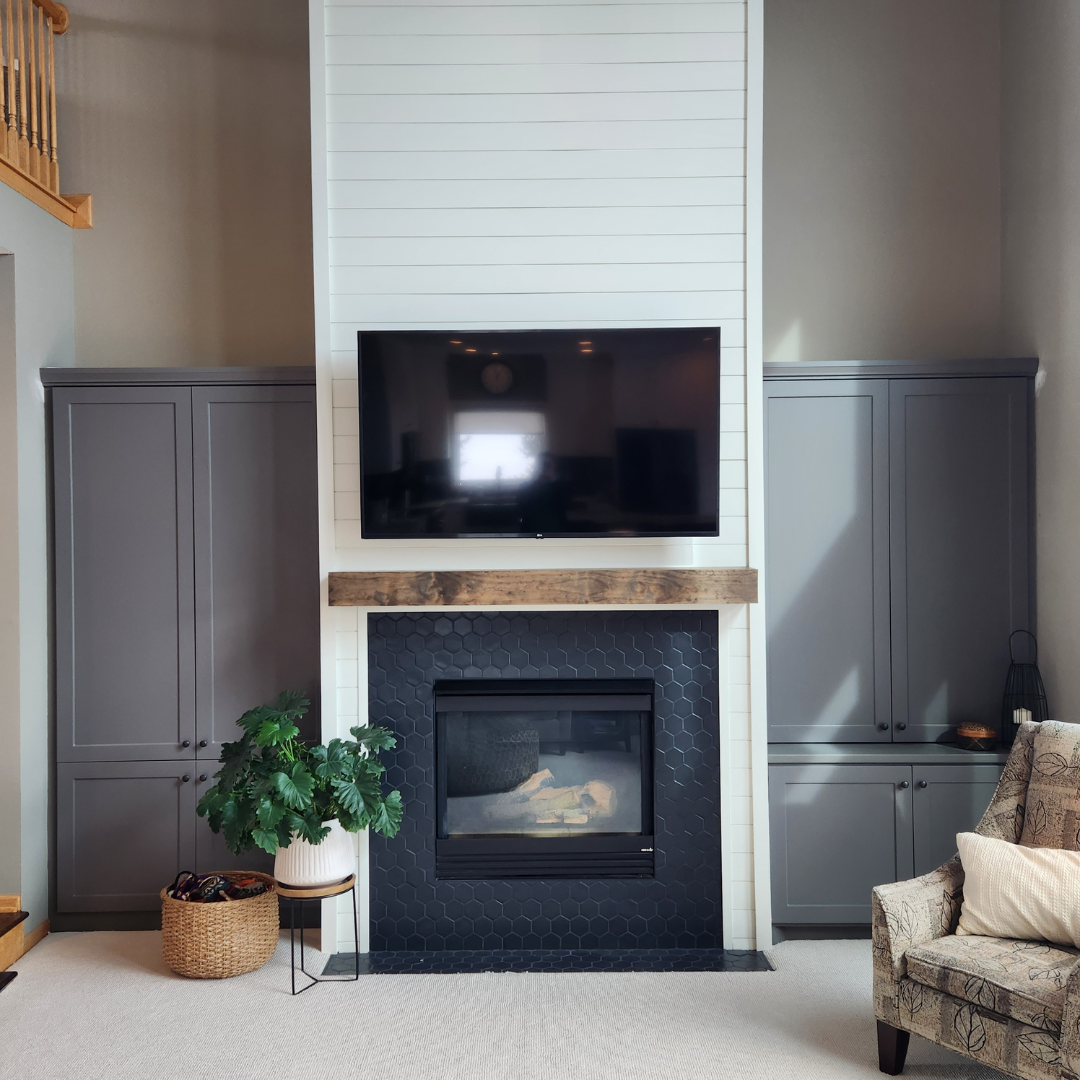
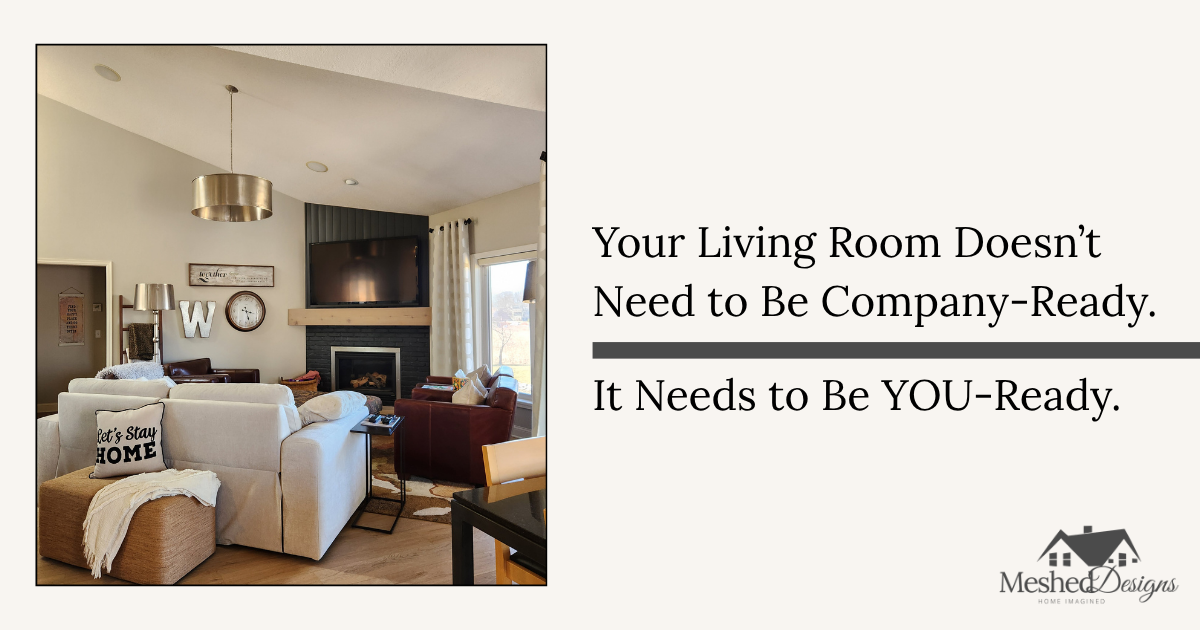
Somewhere along the way, I think we got the idea that our living rooms are supposed to be designed for company.
Enough seating for everyone. Everything perfectly arranged. Nothing too precious disturbed. A room that looks beautiful when someone walks through the door.
But what about a normal Tuesday night?
Because the truth is, your living room is probably used a whole lot more on an ordinary Tuesday than it is when you’re hosting a house full of people.
Your living room doesn’t have to be company-ready. It should be YOU-ready.
And by “you,” I mean the people who actually live in your home and the way you actually spend your time.
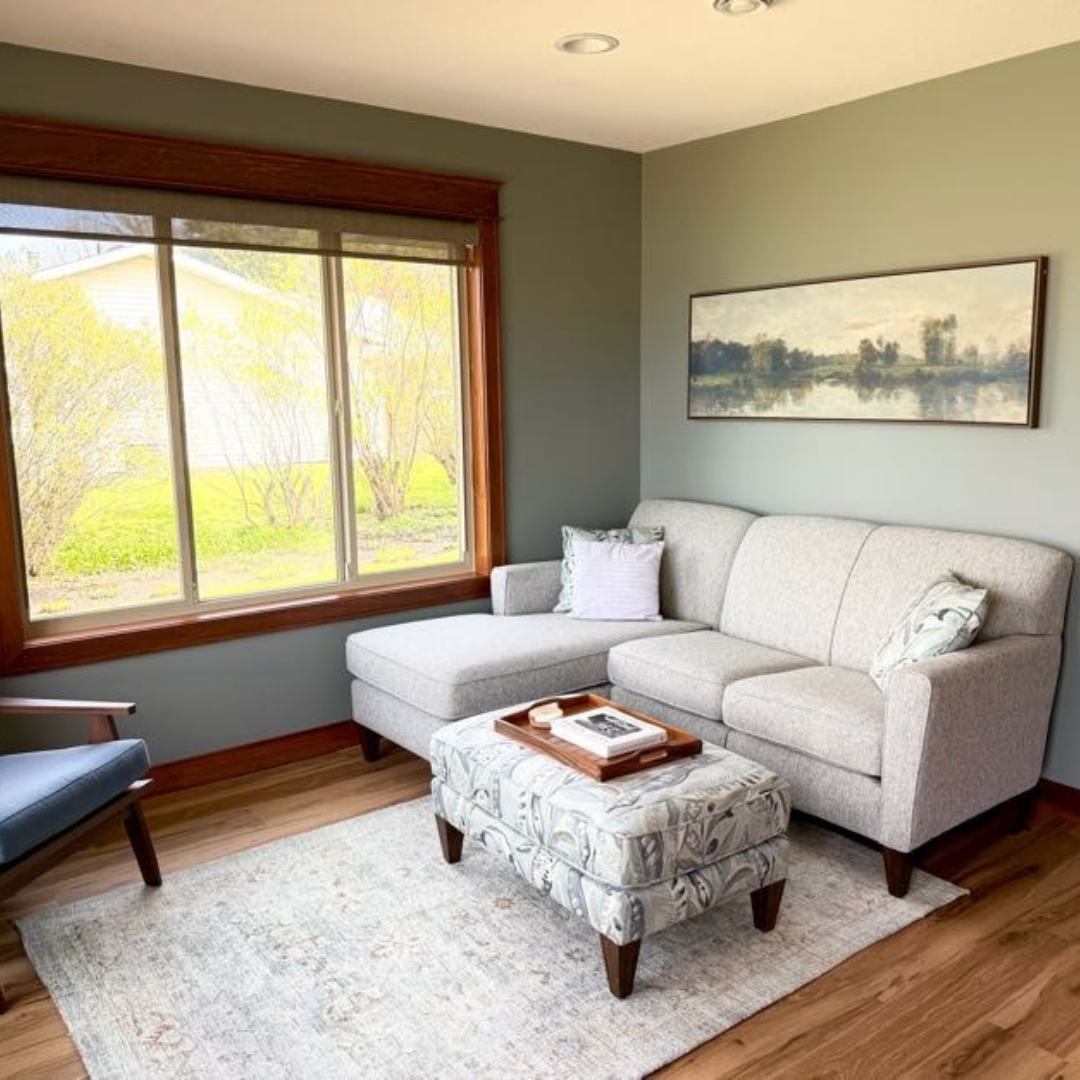
Start With How You Really Live
Before you start thinking about furniture, paint colors, or where the TV should go, think about what happens in this room most often.
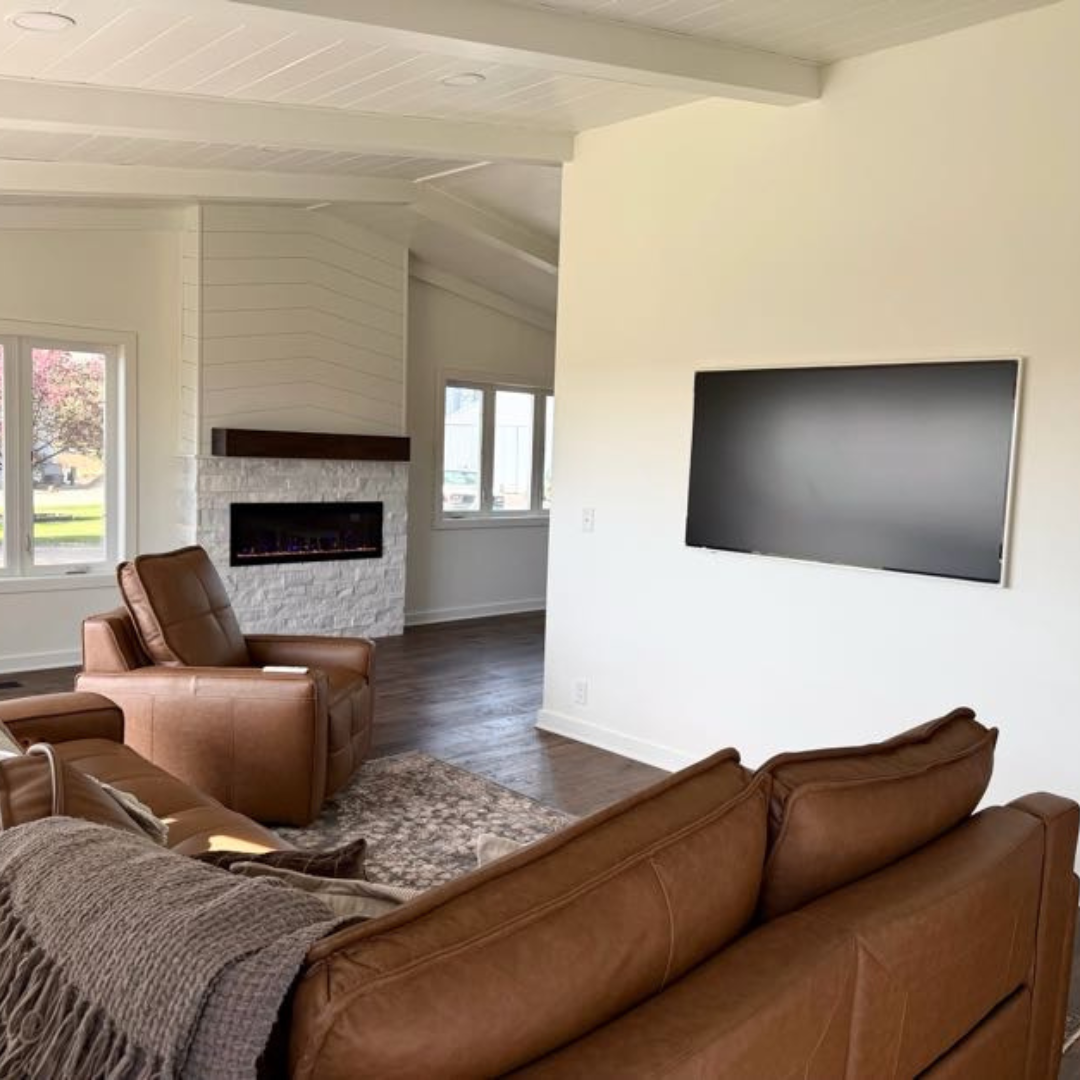
Do you watch TV every night? Then embrace it! Get the big TV. Create a comfortable place to put your feet up. Make sure everyone has a good view, and design the room around those cozy Netflix binges and family movie nights.
Don’t watch much TV? Then why should the television automatically be the focal point of the room? Maybe your living room is better suited for conversation, reading, listening to music, or simply enjoying the view outside.
There isn’t a right answer.
There’s only the answer that makes sense for your home.
Think About the Little Things, Too
This is where good design gets really practical.
If you love having a glass of wine while you watch your favorite show — or maybe a Diet Coke is more your speed — where are you going to put it?
You shouldn’t have to lean halfway across the room to reach the coffee table.
Maybe you need side tables tucked beside your favorite chairs. Maybe you need an ottoman where you can kick up your feet. Maybe you need a lamp next to the spot where you always curl up with a book.
Those little decisions might not be the most exciting things to put on a Pinterest board, but they’re often the things that make a room feel really good to live in.
Let Kids Be Kids
If you have little kids — or grandkids who are at your house regularly — make room for them to be little.
That might mean leaving some open floor space for toys, games, puzzles, and whatever else ends up scattered across the room.
It might also mean that this isn’t the season for the custom, very expensive, absolutely-no-one-touch-it sofa.
You can still invest in good-quality furniture. In fact, I recommend that you do! But choose pieces that can handle real life.
Sticky fingers happen. Things spill. Babies drool. Dogs jump up when they’re not supposed to.
Your home should be a place where your family can relax, not somewhere everyone is afraid to touch anything.
And grandparents, you have options too! Maybe the main living space is where everyone can pile in and be together, while another sitting room becomes the home for the “fancy” furniture — the room where Grandma can say, “Nope, not in here!” 😉
Design for the 95%, Not the 5%
If you entertain every weekend, absolutely consider that when designing your living room.
But if you have a big group over five or six times a year, don’t design the entire room around those five or six occasions.
Chairs can be pulled in from another room. Furniture can shift. People will figure it out.
I’d much rather see you have a room that works beautifully for the way you live the other 350+ days of the year.
Because that’s really what good design is about.
It’s not creating a room that photographs perfectly or checking off a list of things you’re “supposed” to have.
It’s creating a home that supports your life.
So think about your normal Tuesday night.
Where are you sitting? What are you doing? Who’s in the room with you? What do you wish was within arm’s reach? What’s always in the way? What would make that evening just a little more comfortable?
Start there.
Because your living room doesn’t need to be ready for everybody else.
It needs to be ready for you.
Our team would love to help you create a living room (or any space in your home) that’s ready for YOU. Reach out to our team HERE
Need more online support?
Check out these additional resources!