If you’ve followed MeshedDesigns for a while, you probably know our family spends a lot of weekends covered in dust instead of sitting in lawn chairs at a ball field.
For the Haugen family, demolition derbies aren’t just something we watch—they’ve become a big part of our lives together.
People are often surprised when they learn I run derby cars too, so I thought it’d be fun to answer a few of the questions I get asked most often.
Think About Your Typical Workday
Do any of these sound familiar?
- You’re constantly crawling under your desk looking for an outlet.
- Office supplies end up piled on every available surface because there’s nowhere to put them.
- Your desk faces a blank wall… or worse, your back is to the door, and it just doesn’t feel comfortable.
- Every Zoom meeting starts with adjusting lamps or hoping the lighting isn’t too terrible.
- You find yourself working at the kitchen island because your actual office isn’t enjoyable to be in.
None of these are huge problems on their own.
But together? They can make your workday feel a lot more frustrating than it needs to be.
Sometimes There Isn’t a Perfect Solution
I’ll give you an example from my own home office.
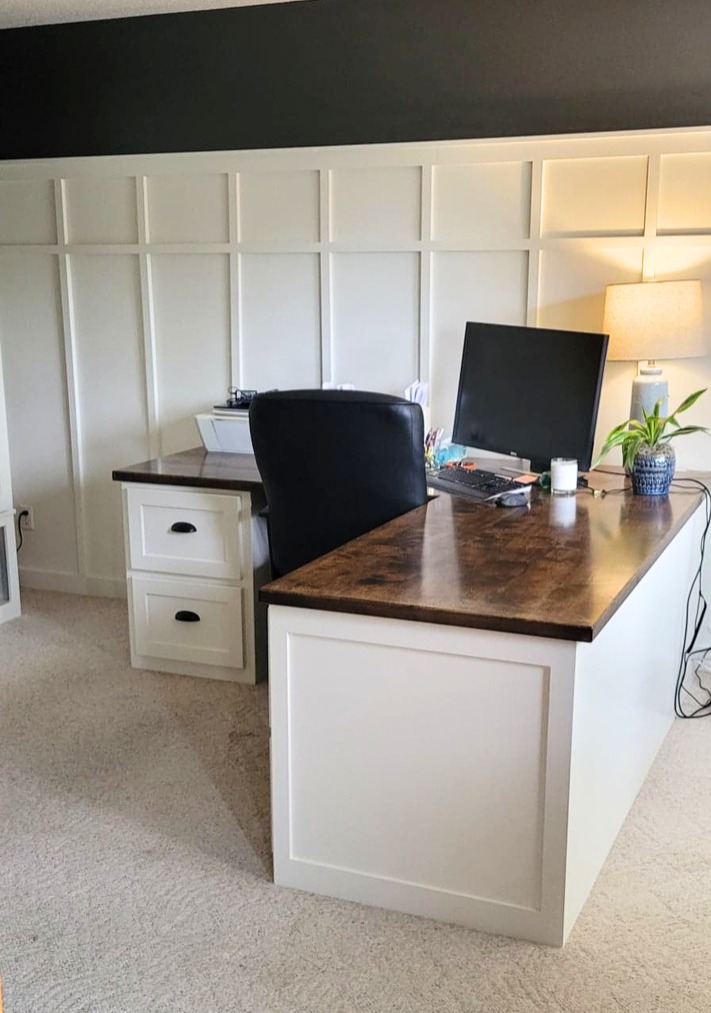
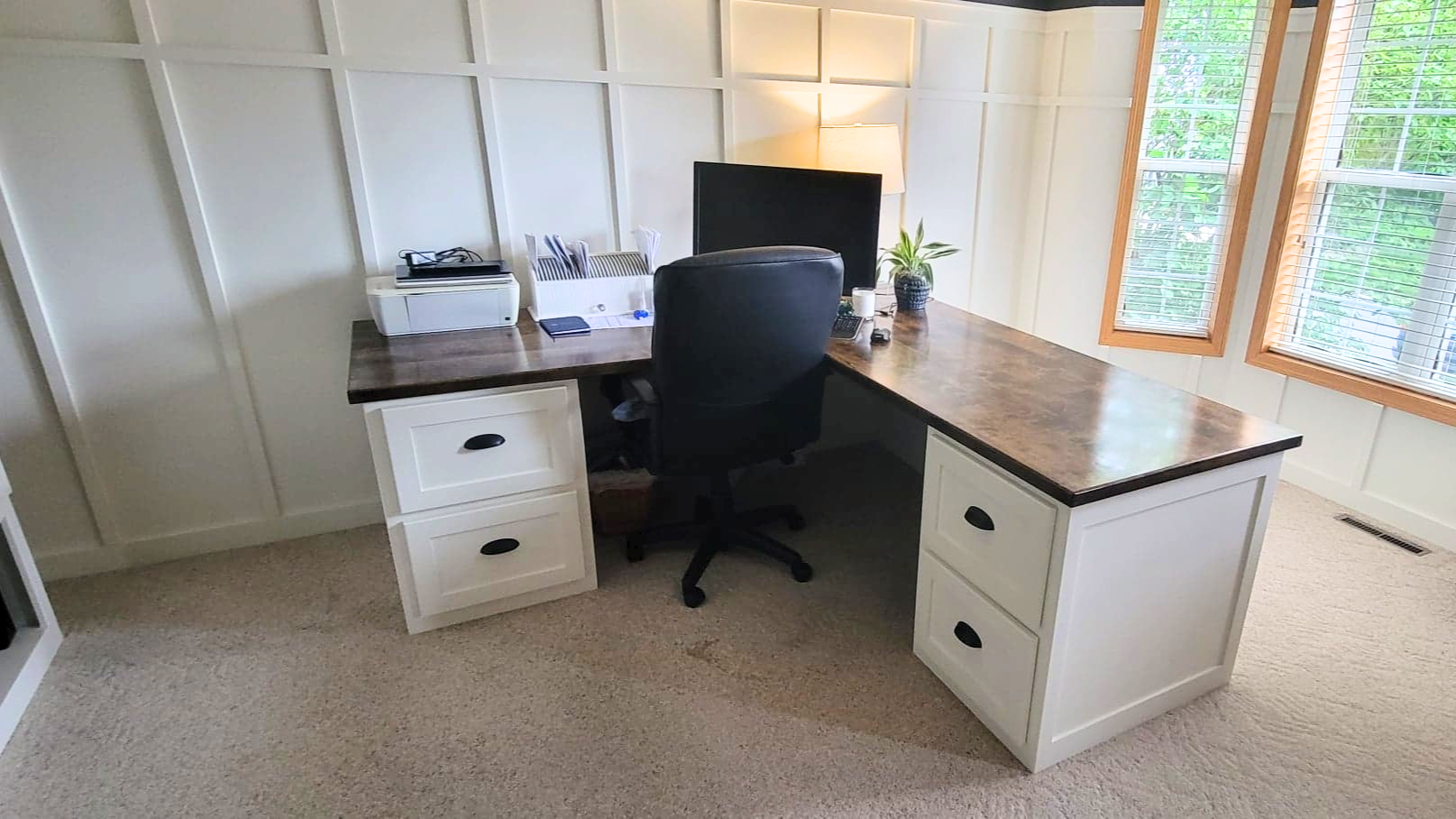
My desk actually floats in the middle of the room.
Most people would probably push it against a wall, but I wanted to be able to look out the window while I worked. I also didn’t want my back facing the door—that’s just one of those things that has always bothered me.
Does having my desk in the middle of the room create a challenge with cords? Absolutely.
Would it be nice to have an outlet right in the middle of the floor? Sure.
But every space has trade-offs.
For me, having the view and feeling comfortable while I work was worth figuring out the cord situation.
Good design isn’t always about finding the “perfect” answer. It’s about deciding which things matter most to you and creating a space around those priorities.
Storage Is Usually the First Thing People Wish They Had
Storage might not be exciting, but it’s one of the biggest issues I see.
Especially now that standing desks have become so popular.
They’re great for flexibility, but many of them don’t include much built-in storage. Before long, notebooks, chargers, paperwork, headphones, and office supplies start taking over every flat surface.
A beautiful office doesn’t stay beautiful for very long if there’s nowhere for everything to live.
Thoughtful cabinetry, shelving, drawers, or even simple organizational solutions can completely change how your office functions day to day.
Your Lighting Matters More Than You Think
We’ve all been there.
You hop on a video call and suddenly realize you’re either sitting in the shadows or the window behind you makes you look like a silhouette.
Natural light is wonderful—but where that light comes from makes a big difference.
The placement of your desk, your windows, and your lighting fixtures can all help create a workspace that’s both comfortable for you and professional when you’re meeting with clients or coworkers.
One Trend That Has Me Curious…
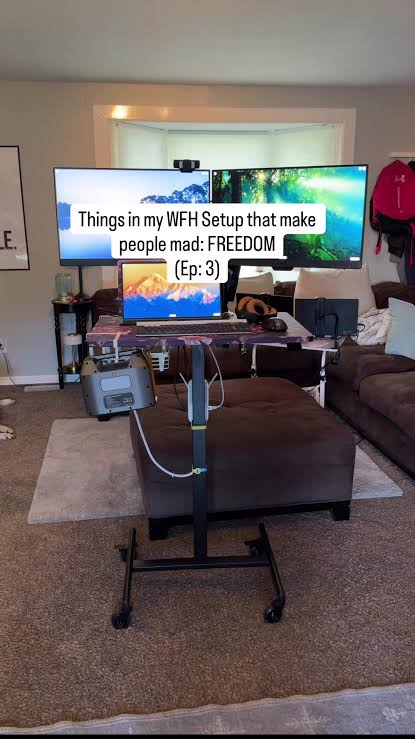
One office trend I’ve been watching lately is the idea of roaming desks.
They’re almost like an upgraded medical cart—a compact workstation on wheels that lets you move your office wherever you want to work that day.
If you have a multi-level home, it could even eliminate the need to carry your laptop and supplies upstairs and downstairs all day. Instead of creating two separate workstations, you simply roll your workspace with you.
I’m interested to see where this trend goes because our workdays don’t always happen in one room anymore. (*check out the screenshot from Instagram of this below)
Design Around the Way You Work
There isn’t one perfect office layout.
Some people need complete quiet.
Others thrive with natural light.
Some need lots of storage.
Others need space to spread out drawings, paperwork, or multiple monitors.
The goal isn’t to copy someone else’s Pinterest office.
The goal is to create a space that supports the way you actually work.
Because when your office functions well, you’ll spend less time fighting your space—and more time focusing on what matters.
Whether it’s a home office or a workspace for your business, a few thoughtful design decisions can make a bigger difference than most people expect.
Sometimes the best productivity upgrade isn’t a new computer.
It’s a better-designed room.
Need more online support?
Check out these additional resources!