When most homeowners start planning a bathroom renovation, the focus naturally goes to the fun decisions — tile selections, faucet finishes, vanities, lighting, and paint colors. And while those design choices absolutely matter, some of the most important parts of a bathroom remodel are the ones you don’t see.
A successful bathroom renovation isn’t just about how it looks when it’s finished. It’s about planning for what happens behind the walls, under the vanity, and beneath the flooring — the details that impact safety, budget, and long-term function.
If you’re planning a bathroom update (or even just thinking about one), these often-overlooked details can make all the difference.

1. “It’s Just a Faucet”… Until It Isn’t
Replacing a bathroom faucet feels like one of the simplest home improvement projects — and sometimes it truly is. But in older homes especially, there’s an important detail that often gets missed: the water shut-off valves inside the vanity.
Over time, these valves can corrode, seize, or stop working altogether. When that happens, what should be a quick faucet swap can require additional plumbing work just to safely shut off and reconnect the water.
This isn’t meant to scare you — it’s about awareness. Just like replacing kitchen countertops can uncover outdated plumbing, bathroom renovations often reveal small updates that are necessary for everything to work properly.
The takeaway:
Even “simple” bathroom updates can come with behind-the-scenes plumbing considerations, especially in older homes. Building flexibility into your plan helps avoid surprises.
2. Lighting Updates Often Trigger Electrical Code Requirements
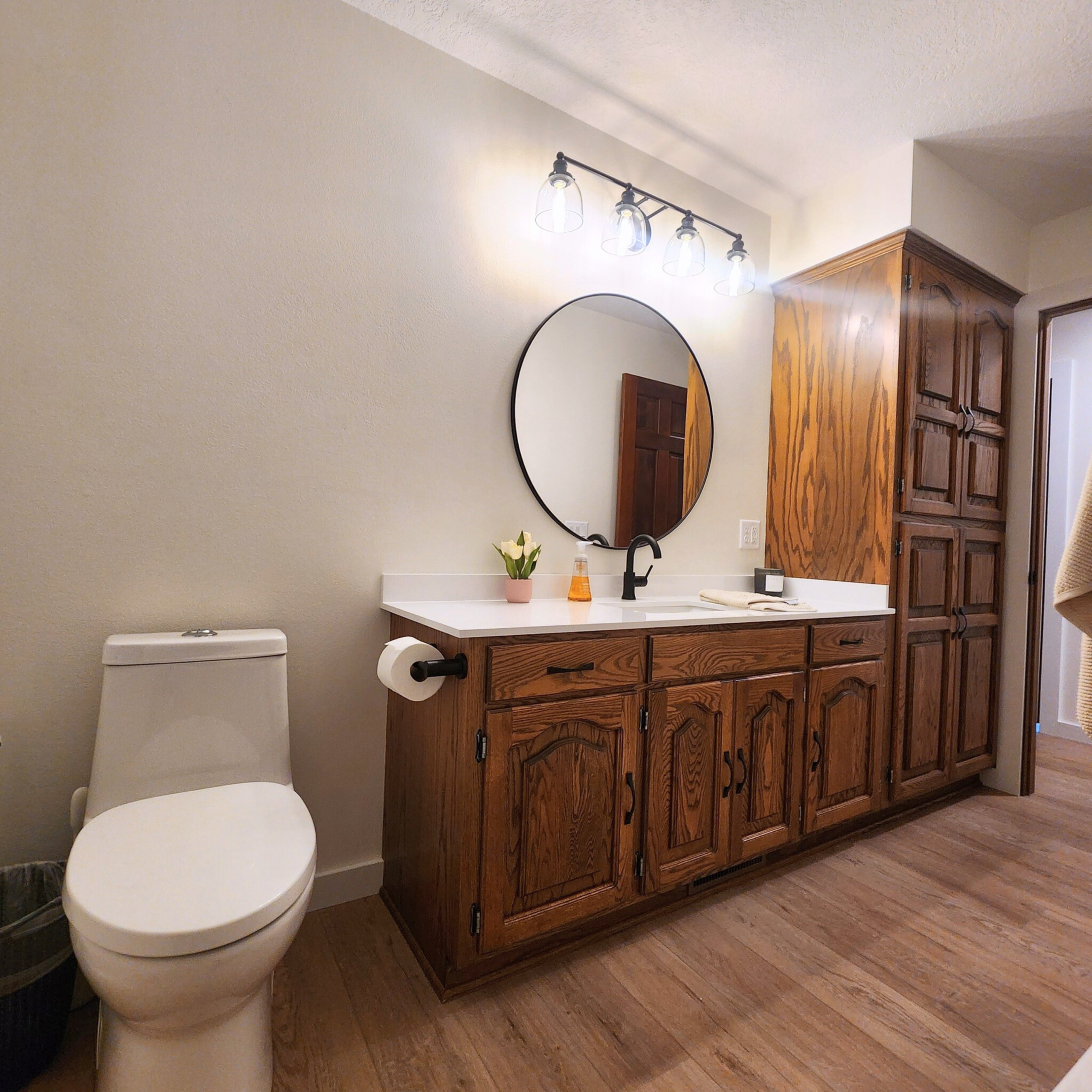
New lighting is one of the fastest ways to transform a bathroom. It can instantly improve brightness, warmth, and functionality — especially in spaces that feel dark or dated.
What many homeowners don’t realize is that changing light fixtures can sometimes require updates to meet current electrical codes. Depending on the age of your home, this might involve updated wiring, proper protection, or upgraded components that weren’t required when the bathroom was originally built.
While this can feel unexpected, it’s actually a positive step. Code-compliant electrical work keeps your home safer and ensures your bathroom renovation holds up over time.
The takeaway:
Bathroom lighting changes aren’t always purely cosmetic. Electrical updates are sometimes part of the process — and they’re an investment in long-term safety and performance.
3. Vanity Changes Can Create a Domino Effect
Vanities are one of the most impactful elements in any bathroom remodel, but swapping them isn’t always as straightforward as replacing a piece of furniture.
Even when a new vanity is close in size, the footprint often differs slightly. When that happens, unfinished flooring can be exposed — which may require new flooring in the space.
And once flooring changes are involved, the toilet often needs to be removed and reset properly, adding another layer of labor and coordination to the project.
The takeaway:
A vanity upgrade can trigger a chain reaction — flooring adjustments, plumbing resets, and additional labor. Planning for this early helps avoid budget and timeline surprises.
Planning Ahead Is What Makes a Bathroom Renovation Successful
None of these details are deal-breakers. They’re simply part of a thoughtful, well-planned bathroom renovation.
When you understand what might come up behind the scenes, you’re able to:
- budget more realistically
- plan timelines with confidence
- make decisions without stress or panic
- enjoy the process instead of feeling caught off guard
The goal isn’t to overcomplicate your bathroom remodel. It’s to ensure the finished space looks beautiful and functions flawlessly where it matters most.
When you plan for the things people often don’t think about, that’s when a bathroom renovation truly becomes a success.
A Question to Leave You With
If you’re thinking about updating your bathroom, ask yourself this:
Am I planning just for how it will look — or also for how it needs to work?
That mindset alone can completely change the outcome of your renovation.
Need more online support?
Check out these additional resources!