Every year, I choose a word — not as a resolution, but as a lens.
Something to come back to when decisions feel rushed, habits feel automatic, or life starts moving faster than I’d like.
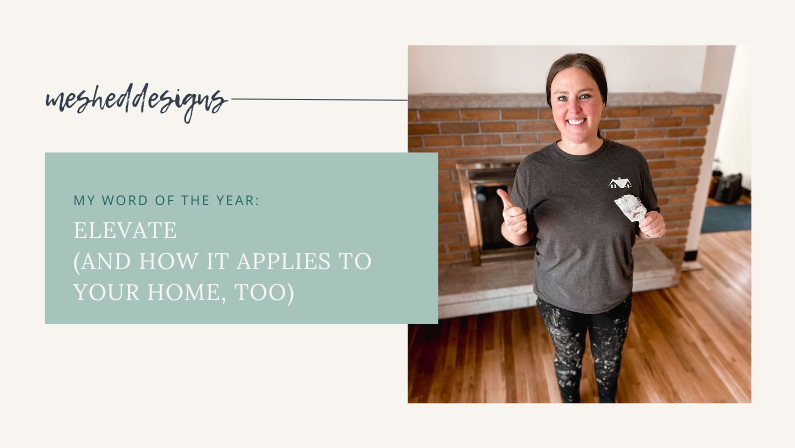
This year, my word is Elevate.
And for me, that doesn’t just live in our projects or our work at Meshed Designs.
It shows up in everyday life — often in the smallest moments.
What “Elevate” Means to Me Personally
Elevate isn’t about doing more.
It’s about doing things with intention.
It’s asking better questions before making quick decisions.
It’s choosing purpose over convenience — even when no one else sees it.
Some days, elevate looks like:
- slowing down instead of rushing through everything
- choosing quality over “good enough”
- being more thoughtful with how I spend my time, money, and energy
It’s not about perfection or productivity.
It’s about awareness.
And once I started looking at my life through that lens, I realized how often this applies to our homes, too.
How Elevation Shows Up in Design (Without Chasing Trends)
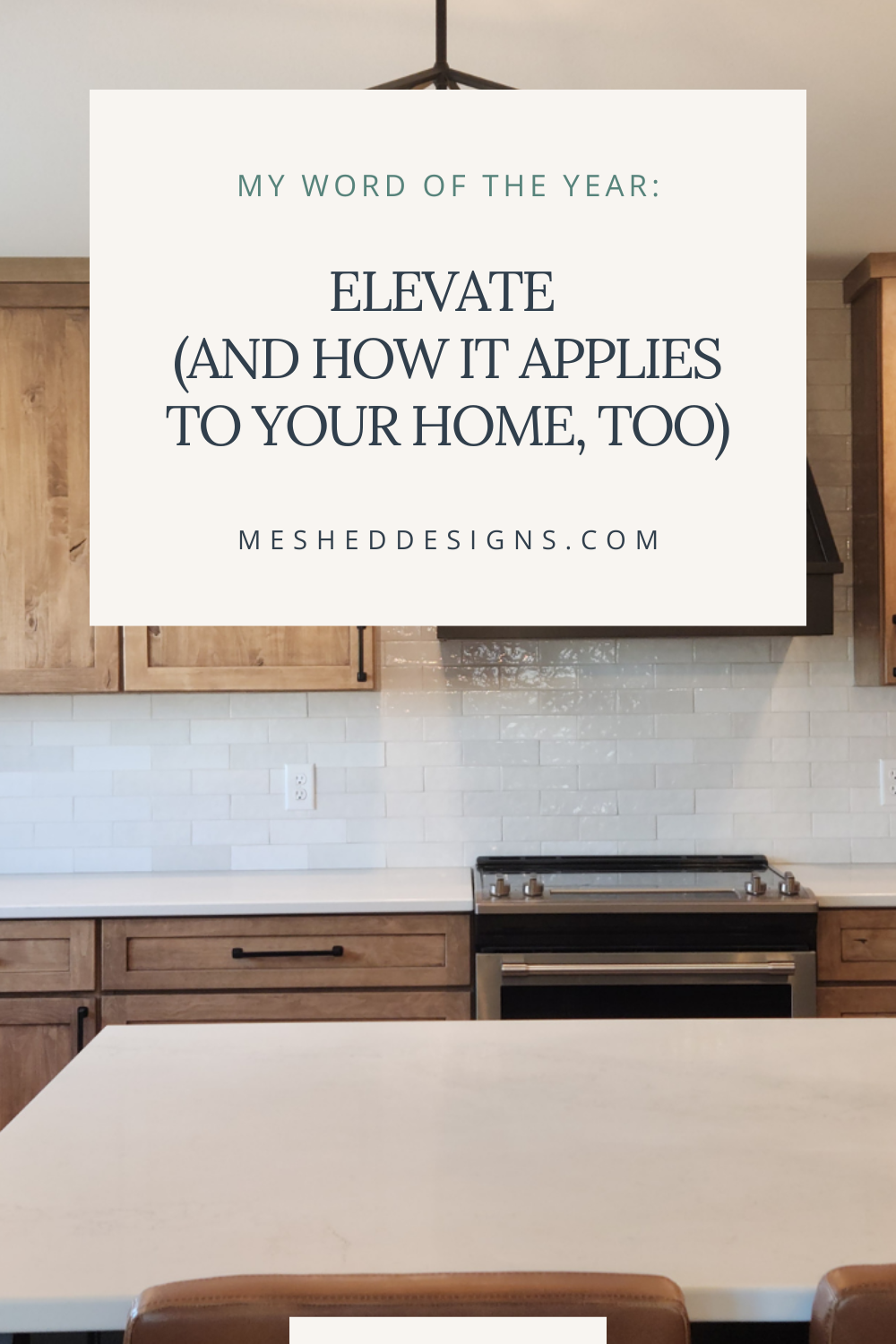
In home design, elevation rarely comes from doing more. It usually comes from choosing one thing to do really well. That might look like:
- investing in a special light fixture instead of several average ones
- choosing a high-quality finish that will age well
- selecting a piece with character instead of something that blends in everywhere
Elevation isn’t about filling a space — it’s about refining it.
This is where we see homeowners feel the biggest difference: when a space starts to feel intentional instead of automatic.
The “Buy Cheap, Buy Twice” Lesson (Applied to Life)
I’ve learned — sometimes the hard way — that buy cheap, buy twice doesn’t just apply to furniture.
It applies to:
- habits
- routines
- shortcuts
- decisions we don’t fully think through
A great example from our own home? Doors.
We chose a quick, convenient option. And while it technically worked, it didn’t elevate the space. Looking back, I wish we had explored alternatives — better materials, more character, something that didn’t look like everyone else’s.
That lesson sticks with me now.
Because elevation isn’t about regret — it’s about learning and adjusting forward.
Elevation Means Asking Better Questions
Before choosing the fastest option, elevation asks:
- Is there a better alternative?
- Will this last — physically and emotionally?
- Does this feel like us, or just what’s easiest right now?
In design, this often leads to:
- fewer impulse decisions
- more cohesive spaces
- homes that feel personal, not copy-paste
And in life, it leads to more clarity and less decision fatigue.
Elevate Doesn’t Mean Playing It Safe
Elevation also means being okay with:
- color
- personality
- a little risk
- resisting the pressure to do what everyone else is doing
Some of the most elevated spaces aren’t the safest ones — they’re the most thoughtful.
The same goes for how we live.
Applying “Elevate” to Your Home (Without Overwhelm)
If you’re feeling stuck or unsure where to start, elevation doesn’t require a full remodel.
Start small:
- upgrade one finish instead of five
- choose one intentional focal point
- pause before defaulting to the fastest solution
Often, the most elevated homes are the ones that feel calm, considered, and personal — not rushed or trendy.
A Question I Keep Coming Back To
Whether it’s a home decision, a family routine, or how I show up each day — elevate reminds me to slow down just enough to choose intentionally.
Not perfect.
Not trendy.
Just thoughtful.
And most days, it starts with one simple question:
Is this the best choice — or just the fastest one?
Need more online support?
Check out these additional resources!