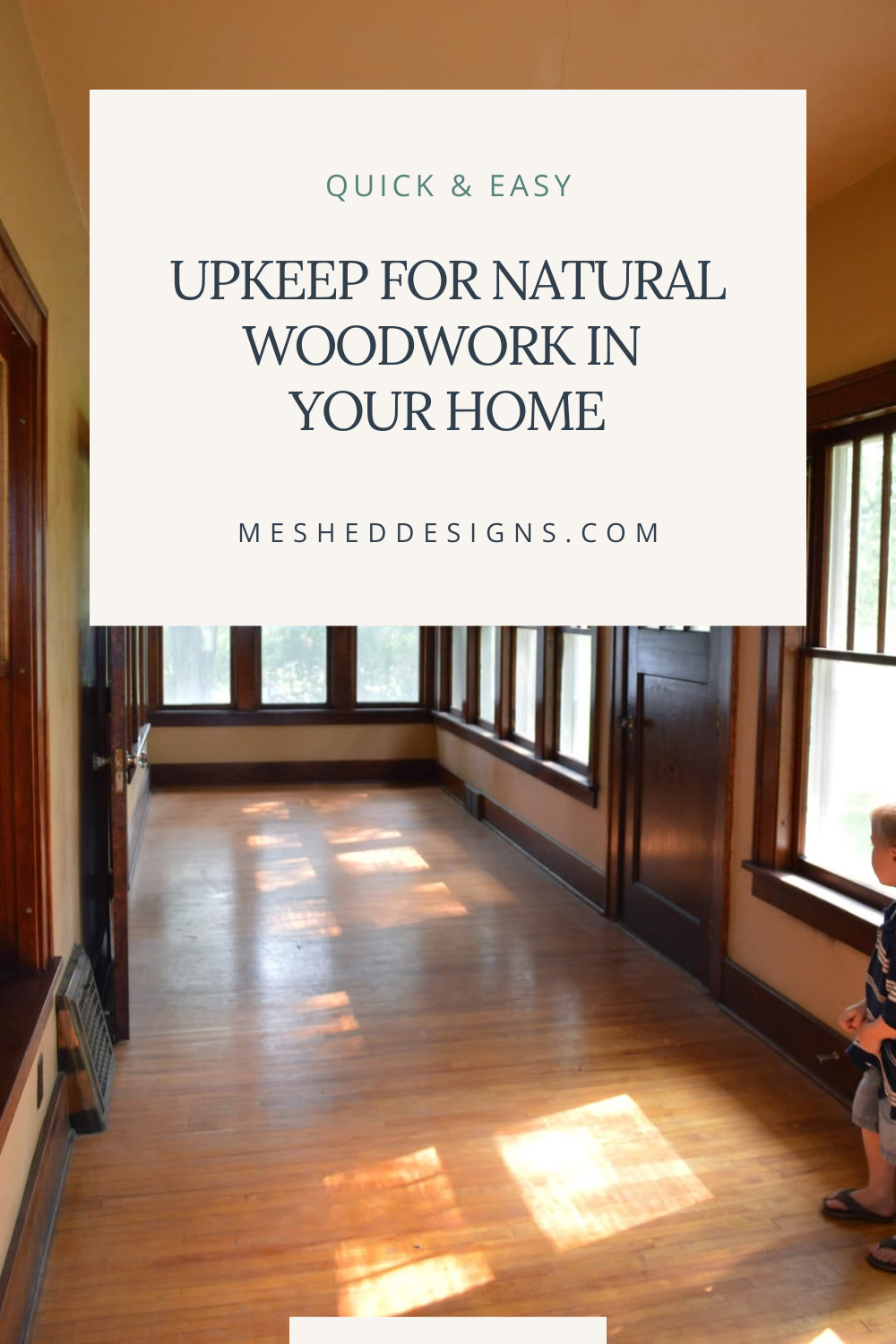
Natural wood adds warmth and character to any space, but over time it can start to show wear—scratches, dull spots, and those little nicks that catch your eye every time you walk by.
The good news? You don’t have to sand, scrape, or completely refinish your woodwork to bring it back to life.
Today, I’m sharing one of my favorite low-effort, high-impact maintenance tips: using Old English to recondition and refresh natural or unpainted wood in your home. It’s something I do periodically throughout the year, and it makes an instant difference.
(Watch the video below for a full demonstration.)
Why I Love Old English for Wood Maintenance
I’ve been using Old English Scratch Cover for over a decade—literally. My bottle doesn’t even have a label on it anymore because it’s lasted so long! It’s a small bottle of conditioning oil available in different tones:
✔️ Dark Wood Formula – perfect for walnut, mahogany, or rich-stained trim
👉 Find it here
✔️ Light Wood Formula – ideal for honey oak, maple, or lighter finishes
👉 Find it here
How to Use Old English on Your Woodwork
You don’t need any special tools—just an old dishcloth and a little bit of product. Here’s my process (as shown in the video):
- Clean First (If Needed):
If your woodwork is dusty or grimy, wipe it down with mild soap, warm water, and a soft cloth. Let it dry completely. - Apply Old English:
Add a small amount of Old English onto your cloth. A little goes a long way! - Rub It In:
Work the oil into scratches, worn edges, and faded areas. I like to go across the grain and focus on any areas where your eye catches damage. - Repeat as Needed:
If your cloth soaks up the product, add a little more and keep going. For heavy-wear areas (like trim in high-traffic rooms), you may want to touch up every few months.
Why This Works
Old English essentially conditions the wood, allowing scratches and worn spots to blend back into the original finish. Instead of noticing a patchy area or light streak, your eye sees a rich, even surface again.
No sanding. No scraping. No expensive refinishing.
Where to Use This in Your Home
-
Baseboards and Trim: High-traffic zones like hallways and playrooms often get scuffed.
-
Door Frames: Perfect for worn edges or corners that have taken a beating.
-
Wood Furniture: Tables, dressers, and even vintage finds from thrift stores.
-
Window Sills: Refresh sun-faded spots without repainting.
Why Regular Wood Upkeep Matters
Small maintenance steps like this make a big difference in how your home feels. Instead of focusing on imperfections, your eye is drawn to a smooth, beautiful finish. It’s one of those quick home improvement hacks that instantly elevates your space.
Final Thoughts
You don’t have to commit to a full-scale house remodel or expensive refinishing to fall in love with your home’s natural wood again. With a $10 bottle of Old English and a soft cloth, you can give your trim, furniture, and woodwork a quick refresh that lasts for months.
✅ Dark Wood Formula: Shop here
✅ Light Wood Formula: Shop here
Want more home design inspiration, renovation ideas, and tips for loving where you live? Be sure to explore our 7 Ways to Love Where You Live post and join us in our Home Imagined Facebook group for more home interiors ideas, remodeling hacks, and cozy living spaces.
Need more online support?
Check out these additional resources!